
Explosion proof lighting projects involve more than selecting wattage, mounting methods, and illumination levels. Certification requirements also affect equipment specification and procurement. ATEX and IECEx are two terms that engineering teams often encounter, but their roles are not identical.
For an explosion proof led project, the applicable framework depends on the destination market, project specification, and local requirements. We therefore start by identifying where the equipment will be used and what documentation the project requires. This makes certification review more practical and reduces confusion during product selection.
ATEX Is Closely Linked to the EU Market
ATEX applies to equipment intended for use in potentially explosive atmospheres within the European Union regulatory framework. When equipment is intended for the EU market, project teams need to identify the applicable ATEX requirements during product evaluation.
ATEX should not be treated simply as a general quality label. Its purpose is connected to equipment used in explosive atmospheres. Engineers and procurement teams still need to examine the intended application, hazardous-area conditions, and relevant product information.
Project documentation should be reviewed before an order is confirmed. Buyers can check the required equipment information, hazardous-area classification, gas or dust conditions, and other project requirements. This creates a clearer basis for comparing lighting products.
IECEx Provides an International Assessment Framework
IECEx is an international conformity assessment system for equipment used in explosive atmospheres. It is commonly encountered in industrial projects where equipment documentation is evaluated according to IEC standards.
This international role makes IECEx relevant to many cross-border projects. However, the destination country remains important because local regulations can determine what documentation or approvals are required before equipment is installed or placed into service.
When specifying an explosion proof work light for an international project, we check the tender documents and destination requirements instead of relying only on the presence of IECEx documentation. This helps procurement teams identify what the particular project actually requests.
ATEX and IECEx Have Different Roles
Both systems address equipment used in explosive atmospheres, so their technical discussions may cover similar hazards. Their regulatory positions are different. ATEX forms part of the EU regulatory approach, while IECEx operates as an international conformity assessment framework.
This distinction matters during procurement. When project documents request ATEX-related compliance, IECEx documentation should not automatically be treated as a direct substitute. The same principle applies when a project specifically asks for IECEx documentation.
At Sunleem EEW, we review the intended market and project information when discussing hazardous-area lighting requirements with industrial customers. Certification is considered together with the application rather than being treated as a separate purchasing label.
Hazardous Zones Still Guide Lighting Selection
Choosing between certification frameworks does not replace hazardous-area classification. Engineers still need to determine whether the site contains explosive gas or combustible dust and identify the relevant zone before selecting lighting.
Zone 1 and Zone 2 relate to explosive gas atmospheres, while Zone 21 and Zone 22 relate to combustible dust atmospheres. Gas and dust groups also provide information that needs to be considered during equipment specification.
For an explosion proof led installation, we recommend confirming these conditions before finalizing the lighting schedule. Certification documents can then be reviewed against the actual hazardous environment rather than being checked without application context.
Product Information Must Match the Hazard
Once the hazardous area is defined, engineering teams can compare the lighting information with the project conditions. This connects certification review with practical equipment selection and keeps the decision focused on the actual site.
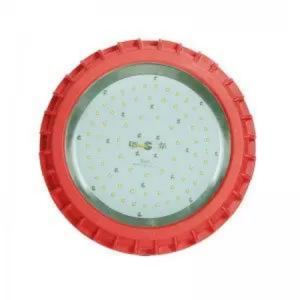
Our BZD130 Series Explosion-proof LED Lighting is suitable for IIA, IIB, and IIC explosion hazardous gas Zone 1 and Zone 2. It is also suitable for combustible dust IIIA, IIIB, and IIIC Zone 21 and Zone 22.
These classifications help engineers identify whether the stated application range corresponds with the project environment. Certification requirements still need separate review. Zone suitability and certification documentation answer related but different questions, so neither should be used as a replacement for the other.
Procurement Starts With Clear Project Information
Before requesting quotations, buyers can prepare several basic project details. These include the destination country, required certification framework, hazardous material, zone classification, and intended lighting application.
For an explosion proof work light, procurement teams should compare this information with the documentation supplied for the specific product. Simply seeing the words “explosion proof” does not provide enough information for a hazardous-area project.
Contractors, distributors, engineering companies, and industrial facility operators can also record certification requirements in their procurement documents. Doing so gives technical and purchasing teams the same reference when they evaluate products and communicate with suppliers.
Match the Framework to the Project
ATEX and IECEx should be selected according to the project rather than treated as competing labels. For EU market applications, ATEX requirements are particularly relevant. IECEx provides an international conformity assessment framework, while local regulations and project specifications still need to be checked.
At Sunleem EEW, we start with the destination market, hazardous conditions, and required documentation before discussing lighting selection. This sequence keeps certification connected to the actual installation. For B2B buyers, identifying these requirements early makes it easier to compare suitable lighting and prepare accurate procurement documents.
Post time: Nov-19-2026


