
Oil production, processing, storage, and transfer can involve flammable gases or vapors. Lighting used around these operations cannot be selected only by brightness, power, or installation cost. Hazardous-area classification, ignition risks, equipment markings, and site conditions all need attention before engineers prepare a lighting specification.
For locations classified as Class 1 Division 1, explosion proof led lighting class 1 division 1 is crucial because flammable gases or vapors may be present during normal operating conditions. We therefore start lighting selection by understanding the hazardous location and the operating environment rather than treating explosion protection as an additional product feature.
Why Class 1 Division 1 Requires Special Attention
Class 1 locations are associated with flammable gases or vapors. Division 1 covers locations where these hazardous substances may exist under normal operating conditions. Electrical equipment installed in such areas therefore requires different selection considerations from equipment used in ordinary industrial spaces.
Lighting fixtures contain electrical components and may operate for long periods. We need to check whether the selected equipment corresponds with the hazardous-area requirements defined for its installation location.
Site conditions can also vary within the same oil facility. Process areas, transfer points, and other operational locations may have different requirements. Engineers should use project classification documents to evaluate each installation area rather than applying one lighting specification throughout the facility.
Lighting Supports Daily Oil Industry Work
Reliable illumination supports inspection, maintenance, instrument reading, and equipment observation. Workers may need to check valves, pipes, connections, gauges, and other components in areas where natural light is limited.
Portable lighting creates another selection question. explosion proof led work lights may be used when maintenance teams move between work locations. The hazardous classification of the actual operating area should be checked before selecting lighting for these tasks.
We also consider how and where lighting will be used. Fixed fixtures and task lights serve different working needs. Identifying the work pattern first helps engineering teams review suitable installation positions and technical requirements more clearly.
Certification Information Needs Careful Review
Certification provides useful technical information when engineers and procurement teams evaluate lighting for hazardous locations. The relevant certificates and product markings should be reviewed against the requirements defined for the project.
Hazardous-area classification systems can differ between projects and markets. Equipment carrying certification under one system should not be assumed to correspond automatically with terminology used under another system. Project documentation should identify the standards and certification requirements that apply.
During technical selection, Sunleem EEW recommends comparing product documentation with the defined hazardous conditions before procurement. This keeps the discussion focused on actual project requirements instead of selecting equipment from a general product description.
Equipment Markings Provide Technical Details
Ex markings contain information about how equipment is classified for hazardous environments. Engineers should read the complete marking and understand the gas or dust group, protection concept, temperature information, and other applicable details.
This review remains important when explosion proof led lighting class 1 division 1 is required for an oil industry project. The terminology used by the project and the certification information supplied with the proposed equipment need to be compared carefully rather than treated as interchangeable labels.
Temperature conditions also deserve attention. Equipment markings provide information that engineers can use during technical evaluation. Actual ambient and operating conditions should be reviewed together with the applicable project requirements.
Product Data Must Match Site Requirements
Once the hazardous-area conditions have been identified, engineers can compare specific lighting products with the project specification. Certification details and Ex markings provide a more concrete basis for this stage of technical review.
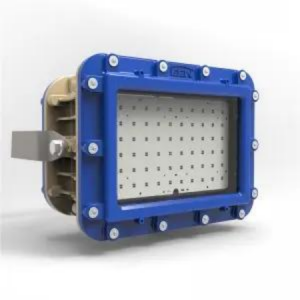
Our ELL601 Series Explosion-proof LED Lighting has the Ex-Mark Ex db IIB+H2 T6/T5 Gb and Ex tb IIIC T80℃/T95℃ Db. Its ATEX certificate number is AÜV 19 ATEX 8446X, and its IECEx certificate number is IECEx TUR 19.0066X.
These details should be read together with the project’s hazardous-area documentation. For oil industry applications, engineers still need to confirm whether the gas group, temperature requirements, certification framework, and installation conditions correspond with the location where the fixture will be installed.
Installation Planning Extends Beyond Lighting Selection
Fixture selection is only one part of hazardous-area lighting planning. Cable entries, wiring methods, mounting arrangements, and associated electrical components also need to correspond with the project design.
Physical location matters as well. Pipes, structural components, platforms, and processing equipment can affect lighting placement and maintenance access. We consider these conditions during planning because a suitable fixture still needs a practical installation position.
Similar checks apply to explosion proof led work lights used during inspection or maintenance. Before bringing portable lighting into a hazardous location, teams should confirm where it will operate and whether its technical documentation corresponds with the requirements for that area.
Hazardous Classification Should Guide the Decision
Class 1 Division 1 lighting matters in the oil industry because lighting may operate in locations where flammable gases or vapors can occur during normal conditions. Area classification should therefore guide certification review, equipment marking checks, installation planning, and the final lighting specification.
For Sunleem EEW, this means starting with the project conditions rather than the fixture itself. Clear hazardous-area information gives engineering and procurement teams a practical basis for comparing lighting specifications and planning installations that correspond with the defined operating environment.
Post time: Nov-20-2026


