
Heavy industrial complexes face constant risks from volatile hydrocarbon vapors, combustible particulates, and aggressive chemical mists. Operating high-voltage illumination within these combustible atmospheres requires enclosures that physically prevent internal electrical arcs or heat from igniting surrounding gases. Using lighting fixtures that are not suitable for the area’s hazardous classification can introduce ignition risks and may result in serious safety and compliance consequences.
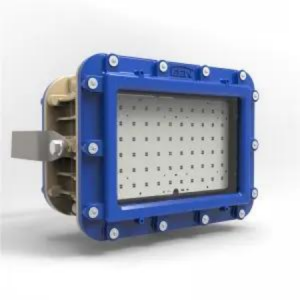
Specifying certified explosion-proof lights across complex industrial footprints is therefore a fundamental life-safety requirement rather than a routine hardware choice. Modern facilities demand specialized optical pathways, rugged metallurgy, and verified thermal envelopes designed for unique operational hazards. Examining where these specialized luminaires operate reveals the engineering discipline needed to protect critical infrastructure.
Downstream Petrochemical Processing and Fractionation Towers
Petrochemical refineries represent some of the most unforgiving environments in modern industry. Fractionation columns, catalytic cracking units, and pump manifolds continually release volatile hydrocarbon gases classified under Zone 1 and Zone 2 atmospheres. Any electrical component operating near pipe bridges or compressor stations must safely contain potential internal detonations while resisting pervasive sulfur-bearing gases.
Sunleem offers explosion-proof lighting in different designs and configurations. Enclosure materials, internal compartment arrangements, and other construction details should be verified against the specifications of the selected model.
In luminaires using flameproof protection, properly designed flamepaths help cool escaping hot gases and prevent an internal ignition from propagating to the surrounding explosive atmosphere. Polycarbonate or toughened borosilicate diffusers resist constant exposure to aliphatic solvents and aromatic hydrocarbons without clouding or surface embrittlement.
Refinery installations also require narrow-profile linear configurations to illuminate crowded catwalks and valve networks without casting blinding shadows. Wide optical distribution angles provide uniform ground-level lux, ensuring operators can monitor analog pressure dials and valve positions safely. Vibration-resistant mounting brackets protect internal LED arrays against persistent harmonic chatter generated by high-pressure centrifugal pumps.
Offshore Drilling Decks and Marine Extraction Platforms
Marine oil platforms experience relentless mechanical abuse, saline humidity, and volatile wellhead gas pockets. Salt encrustation accelerates galvanic corrosion between dissimilar metals, rapidly degrading ordinary fixture housings and mounting hardware. Open drilling floors, mud-logging rooms, and moonpool openings require robust fixtures capable of enduring hurricane-force winds and heavy ocean spray.
Specialized coastal and offshore installations demand marine-grade exterior finishes paired with IP66 or IP67 environmental sealing. The suitability of a luminaire for offshore washdown conditions depends on its certified ingress protection rating, sealing design, and installation requirements. These specifications should be checked against the actual cleaning pressure and environmental exposure. Heat dissipation fins must feature self-cleaning contours that shed salt buildup, ensuring continuous thermal release during unventilated summer heat.
Installing explosion-proof lights certified for the classified area can help reduce electrical ignition risks on offshore assets when the equipment is correctly selected, installed, and maintained. Cast stainless steel or electro-coated aluminum housings prevent spark-producing impact damage from swung cranes, dropped tubular goods, or rough offshore cargo transfers. High-output optical packages pierce dense ocean fog to illuminate helidecks, escape routes, and muster stations without generating glare.
Metallurgical Smelting and Foundry Operations
Metal smelting operations combine blistering ambient heat with clouds of conductive airborne metallic dust. Blast furnaces, ladling pits, and continuous casting lines subject overhead illumination to thermal radiation often exceeding 60°C. Standard commercial fixtures quickly suffer thermal runaway, melted optics, and driver burnouts when deployed near molten metal flows.
Combustible metal dusts, including certain aluminum and magnesium powders, can present serious fire and explosion hazards. The applicable dust-zone classification must be determined from the likelihood and duration of combustible dust clouds under the actual operating conditions. Layers of settling dust form insulating blankets across exterior cooling fins, trapping operational heat inside the fixture. Equipment deployed in these mill bays requires precise T-class ratings to ensure external surface temperatures remain well below the ignition threshold of settled metallic powders.
Designing for metallurgical environments, our team at Sunleem EEW integrates multi-stage heat sinks and high-temperature LED boards capable of sustaining continuous output under sustained ambient thermal loads. Smooth outer profiles prevent particulate accumulation from bridging cooling channels, while specialized tempered glass lenses shrug off hot metal slag splatter and abrasive airborne particles.
Confined Vessel Turnarounds and Storage Tank Maintenance
Periodic plant maintenance requires inspection personnel to enter enclosed chemical storage tanks, crude oil vessels, and rail tankers. These enclosed geometries concentrate residual flammable vapors, creating acute ignition risks for any portable tool brought past the manway. Mobile lighting used during maintenance must withstand rough handling without presenting ignition points.
Maintenance teams depend on heavy-duty explosion proof led work lights to illuminate tight, complex internal bulkheads. Portable units must endure repeated drops onto steel flooring, contact with caustic sludge, and rough dragging by their power cables. Reinforced rubber bump guards, shatterproof optics, and integrated magnetic mounting bases allow technicians to position illumination securely inside cramped compartments.
Portable lighting for confined-space work must meet the site’s electrical safety requirements and the hazardous-area classification. Voltage selection, isolation measures, and equipment certification should be determined through the applicable risk assessment and work procedures. Compression cable glands and heavy-gauge, flame-retardant neoprene cabling prevent physical strain from loosening electrical terminals inside the lamp head. Certified portable systems ensure turnaround crews complete non-destructive weld testing and lining inspections accurately and safely.
Achieving Operational Continuity Across Hazardous Industrial Footprints
Capital project directors know that plant safety depends on unified, certified electrical ecosystems rather than isolated lighting purchases. Pairing fixed luminaires with matching explosion proof led work lights during planned outages ensures seamless safety compliance across every stage of plant operation. Standardized mounting hardware and compatible explosion-proof junctions streamline inventory management while minimizing downtime during urgent turnarounds.
We at Sunleem EEW offer explosion-proof lighting models with specific certifications, including ATEX and IECEx for selected products. Procurement teams should verify each model’s certificates, protection markings, and suitability for the regulations and hazardous-area classification applicable to the project.
Photometric calculations and product testing help assess a luminaire’s suitability for specified operating conditions. Selection should be based on the model’s documented corrosion resistance, ingress protection, temperature rating, and applicable mechanical test results. Investing in tailored hazardous-area illumination safeguards industrial workforces while keeping critical heavy facilities productive and safe.
Post time: Nov-25-2026


