
Sourcing heavy-duty containment hardware for classified industrial sites seems straightforward until inspectors halt commissioning over uncertified internal changes. Procuring electrical explosion proof enclosures requires balancing mechanical containment, internal heat dissipation, and strict legal certifications. Overlooking a single environmental or operational factor compromises overall facility safety and exposes personnel to severe risks.
Misjudging internal layouts or regulatory paperwork causes expensive installation delays during critical project phases. Petrochemical refineries, chemical plants, and offshore platforms cannot tolerate field modifications on thick-walled flameproof housings. Avoiding common procurement missteps ensures dependable power delivery, streamlined safety inspections, and sustained asset protection across volatile operating zones.
Managing Internal Thermal Density and Surface Temperature Limits
Heat dissipation represents an overlooked operational hazard within tightly sealed metal housings. Densely packed electrical components generate concentrated thermal energy that cannot ventilate outward into volatile surroundings. Installing excessive circuit breakers or motor starters inside a compact housing leads to rapid electronic degradation and sudden component burnout.
Exceeding maximum surface temperature ratings voids hazardous-area compliance immediately. The maximum surface temperature of an enclosure must remain within the limits specified by its temperature classification and certification for the intended hazardous area, taking the ambient temperature and relevant ignition characteristics into account. Engineers must calculate total internal dissipated wattage and ambient operating extremes before finalizing physical housing dimensions.
Enclosure sizing and component layout should account for internal power dissipation, ambient temperature, and the temperature limits of the selected equipment. Any thermal calculations or cooling provisions should be verified for the specific assembly rather than assumed to be standard features. This design practice safeguards internal electronics while preserving mandatory temperature code compliance across continuous processing shifts.
Preventing Conduit Entry and Spacing Oversights
Field technicians regularly encounter newly delivered enclosures with crowded conduit hubs that leave zero wrench clearance for gland installation. Unauthorized drilling or machining can compromise an enclosure’s certified protection and should not be carried out unless explicitly permitted by the manufacturer’s documentation and applicable certification requirements. Cable-entry locations and sizes should be confirmed before production or installation.
Conduit hubs positioned too close together prevent electricians from tightening neighboring glands without damaging external protective plating. Restricted clearance leads to crossed threads, skewed gland alignment, and damaged elastomeric sealing rings that fail pressure tests. Every hub entry requires ample spatial clearance for locknuts, grounding rings, and external protective weather shrouds.
Establishing detailed cable entry schedules early in the procurement cycle prevents costly layout conflicts during field installation. Project engineers must calculate minimum cable bend radii within the housing cavity to prevent pinching conductor insulation against sharp internal edges. Spacious wire routing channels streamline termination work and simplify future circuit modifications.
Sidestepping the Component-Only Certification Trap
Project managers frequently confuse an enclosure certified as an empty component with a fully certified operational assembly. Component certificates carry a “U” suffix, indicating that the empty metal enclosure requires supplementary testing once internal electrical equipment is installed. Sourcing a “U-marked” empty box does not confer field operational compliance under international safety codes.
Populating an empty housing with uncertified internal hardware shifts direct legal manufacturing responsibility onto the installing contractor. Regulatory safety inspectors reject uncertified assemblies during turnover audits, demanding expensive on-site field evaluations or complete equipment replacement. Procuring fully certified integrated systems eliminates regulatory uncertainty and accelerates commercial operating approvals.
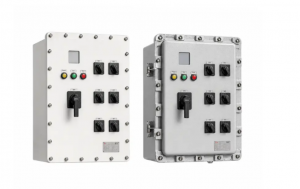
Configuring an industrial distribution board demands absolute compliance with approved internal component lists and factory-tested power dissipation limits. Sunleem’s EDB series supports customized distribution board configurations. Buyers should verify the certification status, approved configuration, and supporting documentation of the specific assembly before placing an order.
Mitigating Internal Condensation and Ingress Vulnerabilities
Sealed metal housings experience continuous atmospheric pumping cycles driven by operational heat changes and day-night temperature swings. Warm air within the enclosure contracts as internal equipment de-energizes, creating a negative pressure differential that draws moist ambient air past silicone sealing gaskets. Over extended operating periods, trapped humidity condenses into standing pools of internal water.
Internal moisture accumulation corrodes sensitive electrical terminals, degrades copper busbar conductivity, and causes catastrophic phase-to-ground flashovers. An IP rating indicates protection against specified external ingress conditions, but it does not by itself prevent condensation caused by temperature and humidity changes inside an enclosure. Where condensation is a concern, the enclosure design and any approved moisture-control measures should be evaluated for the intended environment.
If condensation control is necessary, use only moisture-management accessories approved for the specific enclosure and its protection concept. Their installation must comply with the manufacturer’s instructions and certification conditions so that the enclosure’s required protection is maintained. Incorporating proactive drainage safeguards internal electrical circuits across humid coastal and chemical facilities.
Conducting Rigorous Technical Audits Prior to Purchase
Successful industrial sourcing requires a structured engineering checklist that balances structural containment against routine operational maintenance. Procurement teams must request complete engineering approval drawings detailing exact internal component placement, terminal strip orientations, and external hub coordinates before issuing manufacturing releases. Catching spatial interferences on paper avoids costly field modifications later.
Standardizing enclosure specifications across compatible installations can simplify spare-parts planning and maintenance. Before standardizing, teams should verify mounting dimensions, fasteners, internal layouts, and certification requirements for each selected model. Consistent procurement specifications reduce warehouse inventory burdens while accelerating scheduled plant turnaround operations.
Ordering an integrated distribution board warrants careful inspection of mechanical hinge hardware, captive bolt designs, and corrosion-resistant surface treatments. Heavy cast flameproof covers require robust stainless steel hinges to prevent dropped doors and damaged precision flame paths during maintenance checks. Quality surface coatings shield base castings from airborne chemical degradation.
Engaging with Sunleem EEW connects engineering teams with seasoned technical specialists who review application parameters before metal cutting begins. Comprehensive pre-procurement validation eliminates costly field delays, guaranteeing that your hazardous-area electrical systems provide uncompromised physical protection, full regulatory compliance, and reliable operational continuity over decades of demanding plant service
Post time: Nov-25-2026


