
Procurement teams evaluating electrical distribution gear for classified industrial facilities shoulder immense safety liabilities if field junctions fail. Airborne volatile vapor clouds and combustible dust layers turn routine termination faults into violent deflagrations unless fully contained by certified, heavy-duty structural barriers.
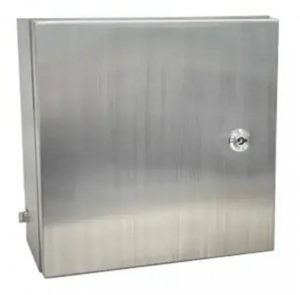
Sourcing a reliable explosion proof junction box requires engineering scrutiny that reaches far beyond basic physical footprint dimensions. Discerning buyers must evaluate certified containment methods, thermal thresholds, and mechanical metallurgy to guarantee complete plant safety across decades of continuous processing operations.
Atmospheric Classification and Protection Method Validation
Plant safety verification begins by aligning the enclosure’s protection concept directly with localized hazard zones. Specifiers should select the protection concept according to the hazardous-area classification and equipment requirements. Ex d enclosures are designed to contain an internal explosion and prevent flame propagation, while Ex e equipment uses enhanced design measures to reduce the likelihood of ignition under its specified operating conditions.
Gas group classification helps determine whether equipment is suitable for the explosive atmosphere present. Buyers should verify the enclosure’s gas-group marking and protection concept against the substances and hazardous-area classification at the installation site. Processing facilities handling volatile hydrogen or acetylene demand certified Group IIB+H2 or Group IIC enclosures with precision flamepaths engineered to cool expanding gas fronts before they vent into surrounding atmospheres.
Operating environments also require strict adherence to certified temperature classes. Selecting a housing with appropriate T-ratings ensures outer casing surfaces never approach the autoignition temperature of surrounding explosive gases, even under full electrical loading during peak summer ambient conditions.
Navigating international certification schemes such as ATEX, IECEx, and NEC standards avoids costly compliance roadblocks during commissioning. Securing junction units carrying comprehensive dual or global safety markings simplifies complex engineering procurement, satisfying strict third-party insurance audits and statutory safety inspections.
Metallurgical Selection for Severe Chemical Environments
Hostile marine air, chemical washdowns, and sulfurous fumes rapidly attack unprotected industrial enclosures. Galvanic corrosion across dissimilar metals erodes structural wall thickness over time, gradually compromising certified pressure containment boundaries and creating dangerous pathways for pressurized explosive gas ignition.
Deploying a rugged corrosion resistant junction box constructed from AISI 316L stainless steel provides dependable defense against environmental degradation. The molybdenum content of 316L stainless steel improves its resistance to pitting and certain corrosive environments, but material suitability should be assessed against the specific chemicals, temperatures, and exposure conditions of the installation.
Our engineering specialists at Sunleem EEW cast and fabricate marine-grade stainless steel enclosures to endure hostile processing regimes. Surface treatments and corrosion-protection measures should be selected according to the enclosure material and intended environment. Any treatment affecting certified dimensions or surfaces must comply with the manufacturer’s specifications and applicable certification requirements.
Internal Volumetric Sizing and Thermal Dissipation Limits
Cramped internal enclosures create severe wiring congestion that damages delicate conductor insulation during routine maintenance tasks. Forcing heavy industrial cables into tight bends exceeds mandatory bending radius limits, causing conductor fatigue, cracked dielectric jackets, and localized electrical shorts over extended operational periods.
Calculating maximum thermal dissipation prevents excessive internal temperature rise across dense terminal blocks. Every terminal point, miniature breaker, and control relay radiates heat, requiring adequate enclosure surface area to transfer thermal energy outward without elevating certified exterior surface temperature ratings.
Generous dimensional sizing leaves ample physical clearance for wiring looms, grounding bars, and terminal identification tags. Providing generous spatial separation simplifies wire routing, prevents accidental heat concentration between adjacent terminals, and readily accommodates future facility instrumentation expansions without replacing costly enclosures.
Factory Machining Layout and Conduit Entry Spacing
Unauthorized field drilling or threading can compromise an enclosure’s certified protection and may affect warranty coverage. Confirm entry locations and machining requirements with the manufacturer before making modifications. Manual field machining creates microscopic wall fractures, uneven thread engagement, and distorted flamepaths that rupture violently when subjected to sudden internal deflagration pressure spikes.
Procurement documents must clearly define exact conduit entry locations, thread specifications, and clearance intervals. Maintaining adequate spacing between entry hubs allows technicians to install heavy flameproof cable glands with standard wrenches without scraping adjacent fittings or cracking cast structural hubs.
Skilled manufacturing teams at Sunleem EEW utilize advanced multi-axis CNC machinery to execute precise entry layouts. Computerized milling delivers exact NPT and metric thread depths, guaranteeing smooth mechanical fit, exceptional gas-tight engagement, and dependable structural grounding continuity across all conduit runs.
Ingress Gasketing and Maintenance Fastener Durability
Dual-barrier sealing configurations isolate internal electrical terminations from driving rain, pressurized washdown jets, and fine particulate penetration. Enclosure gaskets help provide the specified ingress protection when correctly selected and installed. Buyers should verify the model-specific IP rating and protection concept rather than assume that gasket placement or metal-to-metal contact provides flameproof protection.
Durable maintenance hardware prevents operational delays and hazards during routine turnaround inspections. High-tensile stainless steel captive cover screws eliminate dropped fasteners across open mezzanine grating while ensuring uniform gasket compression and repeatable flange closure torque across hundreds of service cycles.
Appropriate enclosure sealing can help limit moisture ingress, but it does not eliminate condensation caused by temperature and humidity changes. Where condensation is a concern, assess the installation environment and use only moisture-control measures approved for the selected enclosure. Helping reduceambient moisture ingress stops terminal oxidation, tracking currents, and accidental ground faults that disrupt sensitive digital instrumentation and bus communication lines across petrochemical refineries.
Procurement Synthesis for Lifecycle Integrity
Analyzing total lifecycle cost shows that initial purchase price represents merely a fraction of true enclosure operating expense. Cheap, uncertified terminal boxes cause frequent downtime, rapid corrosion failures, and devastating safety liabilities that dwarf initial savings within a few months of installation.
Industrial operators partner with Sunleem EEW to source customized, heavy-duty enclosures that satisfy rigid global standards. Comprehensive metallurgical verification, precise flamepath machining, and extensive third-party testing guarantee dependable field performance across extreme marine, desert, and chemical processing facilities worldwide.
Prioritizing Certified Enclosures for Long-Term Operational Reliability
Procuring a fully certified explosion proof junction box tailored to specific environmental and electrical parameters protects vital capital assets. Prioritizing robust metallurgy, verified thermal dissipation, and precise entry layouts ensures that critical electrical connections operate safely inside volatile, gas-rich industrial sectors.
Rigorous technical evaluation transforms standard equipment purchasing into an enduring defense against hazardous industrial ignitions. Procurement professionals who examine each mechanical and electrical factor protect plant personnel, ensure regulatory compliance, and maintain reliable production output across the most challenging operating landscapes.
Post time: Nov-25-2026


