
Hazardous-area projects often require electrical products to meet specific explosion-protection requirements. For engineering companies, equipment manufacturers, and industrial buyers, certification is part of technical selection rather than simply a document for purchasing. ATEX and IECEx are two frameworks commonly seen in international projects, but their roles and market applications are different.
When selecting explosion proof electrical fittings, we need to understand what each framework represents, how product markings should be read, and where the equipment will be installed. Identifying these requirements early helps project teams prepare clearer specifications for fittings, lighting, junction boxes, and related electrical components.
ATEX Applies to the European Market
ATEX refers to the European Union framework covering equipment and protective systems intended for use in potentially explosive atmospheres. Applicable products placed on the EU market need to follow relevant regulatory requirements, including conformity assessment and marking.
We recommend looking beyond the word “ATEX” on a supplier document. Buyers should compare the product information with the intended hazardous atmosphere, equipment category, installation zone, and other requirements stated in the project specification.
Product markings provide important information for this review. Depending on the equipment and protection concept, markings can identify details related to gas or dust applications, equipment groups, temperature classes, protection methods, and equipment protection levels.
IECEx Uses an International Certification System
IECEx is an international conformity assessment system based on IEC standards for equipment used in explosive atmospheres. It provides a structured certification approach that can be recognized across participating countries and markets.
However, IECEx certification does not automatically replace every national or regional requirement. Local regulations or project specifications may require additional approvals. We therefore check the destination market before determining which certification documents are relevant.
This distinction matters for international procurement. One project may specify IECEx certification, another may require ATEX compliance, while some projects can include requirements related to both frameworks. These details should be confirmed during engineering rather than after ordering.
The Two Frameworks Share Technical Ground
ATEX and IECEx use many related technical concepts because relevant EN and IEC standards can be closely aligned. Engineers working with either framework will encounter classifications concerning gases, dusts, hazardous zones, temperature, and explosion-protection methods.
Their regulatory roles are not identical. ATEX relates to applicable EU legal requirements, while IECEx operates as an international certification system. We consider this difference when reviewing documentation for products intended for projects in different markets.
For Sunleem EEW, the destination market is an important part of hazardous-area product discussions. The same category of explosion proof electrical fittings can be used in different regions, while the required certificates and supporting documents may vary with local rules and project specifications.
Product Markings Need Careful Review
Certification names alone cannot determine whether a fitting is suitable for a particular installation. We compare product markings with the hazardous-area information provided by the project before confirming a selection.
Gas and dust applications should be distinguished clearly. Engineers also need to check zone classification, gas or dust group, temperature requirements, and protection concepts. This information provides a more practical basis for reviewing products than certification names alone.
The same method is useful when specifying led explosion proof lighting. Certification needs to be considered together with the hazardous zone, explosive atmosphere, environmental conditions, and electrical connections around the lighting fixture.
Flexible Connections Have Specific Requirements
Some hazardous-area installations need flexible connections between fixed electrical components. Such connections may be required between junction boxes, lighting fixtures, and pipes where equipment layout makes a rigid connection less practical.
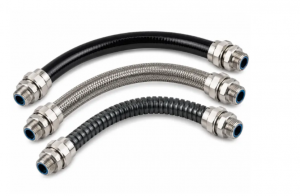
Our NGd Series Explosion-proof Flexible Conduit is available in multiple product types, thread sizes, and lengths. It is suitable for harsh environments involving high temperatures, high humidity, and highly corrosive conditions. The series is widely used for flexible connections between explosion-proof junction boxes, lighting fixtures, and pipes while providing cable protection.
When we review this type of fitting, certification is only one part of the specification. Thread size, required length, connection arrangement, cable protection, and environmental conditions also need to match the actual installation.
Documentation Should Match the Project
Procurement teams should review relevant certificates and technical documents before confirming hazardous-area products. We suggest comparing these documents directly with project requirements instead of treating certification as a separate administrative check.
Destination requirements deserve particular attention in international projects. IECEx may provide an international certification framework, while national regulations can still apply. ATEX becomes relevant when applicable equipment is intended for the EU market.
Documentation checks should extend across connected components. When led explosion proof lighting, flexible conduits, junction boxes, and other fittings form part of the same installation, their specifications should be reviewed against the conditions defined for that hazardous area.
Certification Starts With the Project Location
The practical difference between ATEX and IECEx becomes clearer when the destination market is identified first. ATEX addresses applicable EU regulatory requirements, while IECEx provides an international conformity assessment framework. Project specifications and local rules then determine which certification route or documentation needs attention.
Certification is therefore one part of a wider technical review. Sunleem EEW considers hazardous-area classification, product markings, connection requirements, and environmental conditions alongside certification information. For B2B project teams, checking these points before procurement creates a clearer basis for comparing fittings and preparing specifications for the intended installation.
Post time: Nov-16-2026


