
Selecting industrial luminaires for volatile environments requires matching optical design and thermal management to specific atmospheric hazards. Fixtures built for marine salt spray will overheat or fail inspection if placed in dust-heavy grain silos lacking proper surface temperature controls. Flammable gases, combustible vapors, and airborne dust exhibit fundamentally different ignition properties.
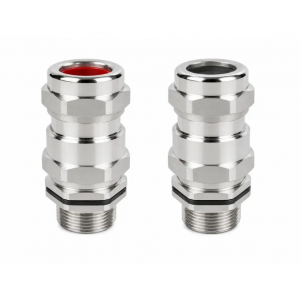
Facility operators must evaluate classified operating zones to verify whether a specialized explosion proof led light matches the precise mechanical, chemical, and thermal demands of each application. Treating hazardous illumination as a generic hardware purchase introduces severe risks of catastrophic ignition, structural regulatory non-compliance, and unexpected plant shutdowns that endanger personnel.
Offshore Drilling Platforms and Marine Terminals
Offshore oil platforms and floating production vessels subject electrical hardware to constant mechanical vibration, pounding waves, and high-salinity marine air. Luminaires deployed on open decks must satisfy rigorous ingress protection ratings, preventing salt crusts from penetrating internal electronics. Mounting brackets must resist continuous harmonic resonance caused by heavy drilling engines and maritime compressors.
Heavy-duty marine housings utilize low-copper cast aluminum or electropolished 316L stainless steel finished with anti-corrosive powder coatings. External hardware requires marine-grade fasteners to eliminate galvanic reaction points against vessel bulkheads. Specifying corrosion-resistant explosion proof electrical fittings alongside marine-rated fixtures ensures that salt mist and driving moisture cannot bypass threaded conduit entries into the main chamber.
Cooling fins on offshore fixtures require self-cleaning profiles that prevent salt spray from forming insulating crusts. Trapped thermal energy degrades LED driver efficiency and accelerates lumen depreciation under continuous maritime service. Resilient silicone seals maintain enclosure integrity under thermal cycling, ensuring high-pressure washdowns, driving rain, and ocean spray never breach sensitive internal driver compartments.
Downstream Hydrocarbon Refineries and Chemical Plants
Chemical processing plants present atmospheres saturated with hydrocarbon vapors, corrosive hydrogen sulfide, and elevated process temperatures. Refineries operating distillation columns require luminaires certified for Zone 1 and Zone 2 under Gas Groups IIB or IIC. Because hydrogen ignites under minuscule spark energies, flameproof enclosures must incorporate precisely machined joint tolerances to safely quench escaping internal flames.
Optical requirements also diverge sharply inside dense pipe racks and towering distillation structures. Operators navigate shadowed stairwells, pressure gauge clusters, and elevated catwalks where blinding glare introduces severe occupational hazards. Modern luminaires combat this through diffused borosilicate glass optics and wide-beam distributions that cast uniform, shadowless illumination across complex valve networks.
For refinery applications, buyers should assess each luminaire’s enclosure design, driver arrangement, surge protection specifications, and certified temperature limits. These characteristics vary by model and configuration. Confirm the permitted ambient temperature range and relevant performance data in the manufacturer’s technical documentation before specifying a fixture for high-temperature or coastal environments.
Grain Elevators and Combustible Dust Facilities
Combustible dust operations—such as grain transfer silos, flour mills, and sugar handling plants—operate under fundamentally different ignition physics than vapor-laden chemical environments. Airborne organic dust deposits directly onto luminaire bodies, creating an insulating blanket that blocks convective heat dissipation. Trapped internal heat elevates enclosure surface temperatures to the ignition point of the surrounding dust cloud, creating severe deflagration risks.
Surface temperature is a key selection criterion for Zone 21 and Zone 22 applications involving combustible dust. Buyers should verify the luminaire’s certified maximum surface temperature and confirm that it is suitable for the ignition characteristics of both airborne dust clouds and accumulated dust layers. The required rating must be determined from the actual dust properties and equipment certification rather than assuming that a T5 or T6 gas temperature class is sufficient. Smooth, angled exterior castings prevent dust from settling on critical cooling fins.
Deploying an appropriately certified explosion proof led light in these facilities requires continuous silicone gaskets that withstand abrasive dust infiltration and frequent high-pressure washdowns. Damaged seals or improperly installed cable entries can reduce a luminaire’s intended ingress protection and allow dust to enter the enclosure. In combustible-dust facilities, buyers should verify the equipment’s dust protection marking, inspect sealing components according to the manufacturer’s instructions, and ensure that installation and maintenance practices address the site’s ignition and dust-accumulation risks.
Industrial Paint Spray Booths and Solvent Vapour Chambers
Paint spray booths and automotive finishing chambers concentrate dense mixtures of flammable volatile organic compounds alongside suspended liquid overspray. Solvents such as acetone, toluene, and xylene continuously attack lens materials, gaskets, and housing seals. Standard polycarbonate lenses quickly turn brittle, haze over, or crack when exposed to solvent-rich chemical mist and regular cleaning cycles.
Compact low-profile housings ensure unhindered airflow inside specialized finishing booths while minimizing overspray accumulation. High color rendering index ratings above 80 Ra allow technicians to detect finish imperfections and paint thickness inconsistencies during active application. Tempered borosilicate glass shields maintain optical clarity, resisting heavy scrubbing and abrasive wipe-downs without yellowing or structural micro-crazing.
Infrastructure Continuity Through Certified Conduit and Hardware
Reliable illumination hardware cannot protect a hazardous facility if the surrounding raceway system remains vulnerable to flammable gas propagation. Luminaires require direct pairing with certified explosion proof electrical fittings, including heavy-duty conduit unions, flexible couplings, sealing hubs, and cable glands designed for Class I, Division 1 or Zone 1 installations. Substandard accessories compromise enclosure containment, allowing flammable vapors to migrate through electrical piping.
Sunleem EEW offers explosion-proof lighting, junction enclosures, and electrical installation equipment for hazardous-area applications. Buyers should verify the compatibility and certification requirements of each selected component, including cable-entry threads, glands, and conduit fittings, to ensure that the completed installation complies with the applicable standards.
Creating a unified, field-ready circuit ensures that every mechanical connection point maintains explosion-containment tolerances, helping reduce costly field retrofits and compliance rejections commonly triggered by mismatched hardware.
Specifying certified luminaires requires looking beyond raw lumen counts to evaluate real-world atmospheric threats. Facility safety depends on selecting housing materials, optical diffusers, and thermal structures specifically tuned to distinct gas mixtures, airborne particulates, and operational stressors.
Our production team at Sunleem EEW continues to develop purpose-built hazardous illumination systems that protect industrial personnel and optimize plant productivity across every classified working environment.
Post time: Nov-20-2026


