
An explosion proof LED work light is a lighting fixture designed and certified for use in hazardous areas where flammable gases, vapors, or combustible dust may create an explosion risk. Unlike a standard LED fixture, an explosion proof LED must be selected according to the hazardous-area classification, protection method, gas or dust group, and temperature requirements.
For industries such as petrochemicals, new energy, new materials, pharmaceuticals, brewing, and offshore operations, lighting is not simply a matter of brightness. Electrical equipment installed in hazardous locations must be suitable for the specific risks present in the area. OSHA requires electrical equipment in hazardous locations to be approved for the hazardous location and the relevant ignitable or combustible material.
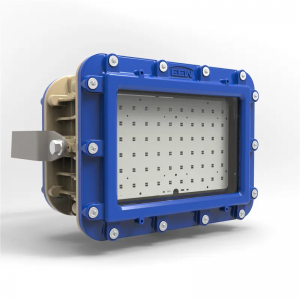
What Is an Explosion Proof LED Work Light?
An explosion proof LED work light is an LED lighting fixture engineered for hazardous environments where ordinary electrical equipment could become an ignition source. The key difference is certified protection against ignition hazards, rather than simply having a stronger housing. IEC 60079-0 specifies general requirements for the construction, testing, and marking of Ex equipment and Ex components intended for explosive atmospheres.
Why Can’t Standard LED Work Lights Be Used in Hazardous Areas?
Standard LED work lights are not automatically suitable for hazardous areas because their electrical components can potentially provide an ignition source. A hazardous-location installation therefore requires equipment whose protection characteristics match the classified environment.
For example, a facility handling flammable gases cannot select a fixture only because it has an LED light source or a high IP rating. The equipment’s Ex protection, gas group, temperature classification, and applicable zone must also be considered.
How Does Explosion Proof LED Lighting Address Ignition Risks?
Explosion proof LED lighting uses a certified protection design to control the risks associated with electrical equipment in explosive atmospheres. The exact protection technique depends on the equipment certification and intended hazardous location.
This means buyers should read the complete Ex marking rather than treating the phrase “explosion proof” as a universal specification. The marking provides information needed to determine whether the fixture corresponds to the intended application.
What Should You Check Before Choosing Explosion Proof LED Lighting?
The first step is to identify the hazardous-area classification and the material creating the risk, because equipment suitability depends on the actual installation environment.
|
Selection factor |
What to check |
Why it matters |
|
Hazardous area |
Gas or dust zone |
Determines the applicable equipment requirements |
|
Gas group |
IIA, IIB, or IIC |
Identifies the applicable explosive gas group |
|
Dust group |
IIIA, IIIB, or IIIC |
Identifies the applicable combustible-dust group |
|
Ex marking |
Protection method and temperature class |
Helps verify equipment suitability |
|
Ingress protection |
IP rating |
Indicates resistance to dust and water ingress |
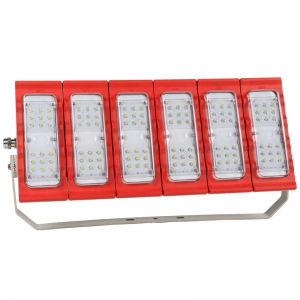
How Do Hazardous Area Zones Affect LED Work Light Selection?
Hazardous areas are classified according to the likelihood and characteristics of flammable or combustible materials being present. OSHA recognizes Zone 0, Zone 1, and Zone 2 for Class I locations where fire or explosion hazards may exist because of flammable gases, vapors, or liquids.
Therefore, users should first obtain the area’s classification from the facility’s engineering or safety documentation. Selecting a fixture before confirming the zone can result in an unsuitable installation.
What Do IIA, IIB, IIC, IIIA, IIIB, and IIIC Mean?
These designations identify different groups of hazardous materials. Gas groups include IIA, IIB, and IIC, while dust groups include IIIA, IIIB, and IIIC. The important point is that a product’s marking must be compared with the actual hazardous material and area classification.
Why Do IP Ratings and Explosion-proof Markings Matter?
An IP rating and an Ex marking address different aspects of equipment suitability. IP protection concerns ingress from solids and liquids, while Ex marking communicates the equipment’s protection characteristics for hazardous atmospheres. For that reason, a fixture can have strong ingress protection without automatically being appropriate for an explosive atmosphere.
How Does Sunleem EEW’s BZD130 Series Explosion-proof LED Lighting Fit Hazardous Applications?
Sunleem EEW’s BZD130 Series Explosion-proof LED Lighting is specified by the manufacturer for both explosive gas and combustible-dust hazardous zones. Sunleem EEW focuses on the explosion-proof industry and provides explosion-proof lighting and other electrical equipment for industrial applications.
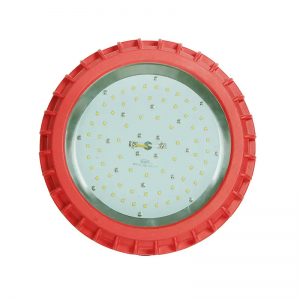
Where Can the BZD130 Series Explosion-proof LED Lighting Be Used?
According to the official product page, the BZD130 Series is suitable for IIA, IIB, and IIC explosive hazardous gas Zone 1 and Zone 2, as well as IIIA, IIIB, and IIIC combustible-dust Zone 21 and Zone 22.
This makes the product relevant to industrial environments where hazardous gases or combustible dust are part of the facility’s classified-area requirements. Users should still confirm the specific installation classification before specifying the fixture.
What Certifications and Protection Markings Does the BZD130 Series Have?
The official product information lists IP66 and the Ex marking Ex db IIC T5 Gb, Ex tb IIIC T95℃ Db. It also lists ATEx certification LCIE 17 ATEX 3062X, IECEx certification IECEx LCIE 17.0072X, and EAC CU-TR certification RU C-CN.AЖ58.B.00192/20.
Key product points include:
Gas application: IIA, IIB, IIC; Zone 1 and Zone 2
Dust application: IIIA, IIIB, IIIC; Zone 21 and Zone 22
Ingress protection: IP66
Ex marking: Ex db IIC T5 Gb, Ex tb IIIC T95℃ Db
Certifications: ATEx, IECEx, and EAC CU-TR
For detailed product information, users can review the official BZD130 Series Explosion-proof LED Lighting page before final equipment selection.
How Should You Choose an Explosion Proof LED Work Light?
The most reliable approach is to work from the hazard classification to the product certification, rather than starting with the fixture’s appearance or unverified LED specifications.
Which Factors Should Industrial Users Compare?
Oil and chemical facilities should verify gas classification and zone requirements. New-energy and new-material facilities should determine whether the area involves flammable gases or combustible dust. Pharmaceutical, brewing, and offshore facilities should likewise assess the specific classified areas defined by their engineering and safety requirements.
The comparison should then include Ex marking, temperature classification, ingress protection, certifications, and installation requirements.
How Can You Match an Explosion Proof LED Work Light to the Actual Hazardous Area?
Start with the area’s documented classification, identify the hazardous substance group, and then compare those requirements against the complete product marking and certification. This process prevents a common mistake: assuming that every product described as an explosion proof LED is suitable for every hazardous environment.
Conclusion: What Makes an Explosion Proof LED Work Light Suitable for Hazardous Areas?
A suitable explosion proof LED work light is one whose certified protection characteristics correspond to the actual hazardous area, material group, temperature requirements, and environmental conditions.
For industrial users, the decision should therefore begin with the site’s classification and end with verification of the product’s markings and certifications. Sunleem EEW’s BZD130 Series provides documented coverage for specified gas and combustible-dust zones, together with IP66 protection and ATEx, IECEx, and EAC CU-TR certifications.
By treating explosion proof LED lighting as a safety-selection question rather than simply a lighting purchase, facility operators can make equipment decisions that are more closely aligned with the actual requirements of hazardous industrial environments.
SEO Metadata
URL: /what-is-an-explosion-proof-led-work-light/
Title: What Is an Explosion Proof LED Work Light?
Keywords: explosion proof led, explosion proof led lighting
Description: Learn what an explosion proof LED work light is, how explosion proof LED lighting is selected for hazardous areas, and how Sunleem EEW’s BZD130 Series meets specified gas and dust zone requirements.
Post time: Nov-16-2026


