
Choosing lighting for a hazardous industrial environment involves more than selecting a fixture with sufficient brightness. The equipment must be designed for the relevant explosive atmosphere, tested according to applicable requirements, and supported by certification that matches the intended installation and target market.
For buyers comparing explosion-proof lighting manufacturers, the evaluation should go beyond product appearance or rated power. Product design, manufacturing consistency, testing, certification, and application suitability all need to be considered together.
For industries such as petrochemicals, new energy, new materials, pharmaceuticals, brewing, marine, and offshore engineering, these factors provide a practical framework for evaluating an explosion proof led lights manufacturer against documented technical requirements rather than general marketing claims.
What Makes Explosion-Proof Lighting Different from Standard Industrial Lighting?
Explosion-proof lighting is designed for hazardous environments where flammable gases, vapors, or combustible dust may be present. Its protection concept must correspond to the applicable hazardous-area classification and equipment requirements.
Managing Ignition Risks in Hazardous Areas
Conventional industrial lighting is not automatically suitable for explosive atmospheres. Electrical equipment can contain potential ignition sources, including electrical arcs, sparks, or hot surfaces.
Explosion-proof lighting therefore requires an appropriate protection method and Ex marking. Before selecting a fixture, engineers should check the hazardous-area zone, gas or dust group, temperature classification, equipment protection level, and other project-specific requirements.
For example, Sunleem’s BZD130 Series is designed for IIA, IIB, and IIC gas environments in Zones 1 and 2, as well as IIIA, IIIB, and IIIC combustible dust environments in Zones 21 and 22. Its certification documentation specifies Ex db IIC T5 Gb and Ex tb IIIC T95°C Db protection.
Considering Environmental Conditions
Explosion protection is only one part of the selection process. Industrial lighting may also be exposed to humidity, corrosion, dust, temperature changes, and outdoor conditions.
These factors can affect enclosure protection, material selection, installation, and maintenance requirements. Sunleem’s product information also identifies high-temperature, high-humidity, and highly corrosive conditions for several explosion-proof products.
What Should You Look for in an Explosion-Proof Lighting Manufacturer?
A suitable manufacturer should provide more than a product catalog. Buyers should examine how products are designed for hazardous environments, how configurations are controlled, and whether technical documentation supports the intended application.
Product Design Based on Hazardous-Area Requirements
Product development should translate the requirements of the intended hazardous environment into a suitable protection concept, enclosure structure, electrical configuration, and mounting design.
For LED lighting, the relationship between the LED source, power supply, enclosure, and thermal characteristics is also relevant. These design factors need to work together with the required Ex protection rather than being evaluated independently.
Recognized Certification and Manufacturing Consistency
Certification provides an important verification step for hazardous-area equipment. IECEx provides an international conformity-assessment framework for equipment used in explosive atmospheres, while ATEX applies to equipment within the relevant European regulatory framework.
However, certification should be checked at the product level rather than assumed across an entire product range.
Manufacturing consistency is also important because the supplied product needs to remain consistent with the certified design and specified configuration.
A Product Range for Different Installation Requirements
Different projects may require LED lighting, floodlights, linear fixtures, or other configurations, so a broader product range allows engineers to match the fixture type and mounting arrangement to different installation requirements.
How Do Explosion-Proof Lighting Manufacturers Develop and Verify Products?
From Hazard Analysis to Product Design
The development process generally connects hazardous-area requirements, engineering design, product testing, and certification.
For example, the BZD130 Series supports several mounting configurations and rated-power options. Its official IECEx documentation lists ceiling, pendant, bracket, flange, and fence mounting, with rated power from 20 W to 120 W.
Testing and Certification
After the design is established, the product undergoes the tests required by the applicable standards and certification scheme. The exact requirements depend on the protection concept, product construction, and intended application.
How Does Sunleem Build Its Explosion-Proof Lighting Portfolio?
Sunleem‘s official portfolio covers several explosion-proof lighting formats for hazardous industrial applications.
ELL601 Series for Explosion-Proof LED Lighting
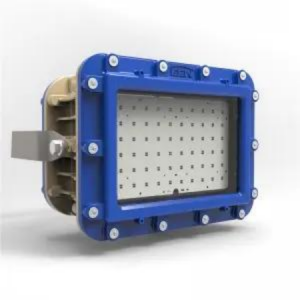
The ELL601 Series Explosion-proof LED Lighting is designed for IIA and IIB+H2 gas environments in Zones 1 and 2, as well as IIIA, IIIB, and IIIC combustible dust environments in Zones 21 and 22. The official product page lists IP66 protection, Ex db IIB+H2 T6/T5 Gb and Ex tb IIIC T80°C/T95°C Db markings, together with ATEX and IECEx certificates.
Key product information:
l Gas environments: IIA and IIB+H2, Zones 1 and 2
l Dust environments: IIIA, IIIB, and IIIC, Zones 21 and 22
l Ingress protection: IP66
l Ex marking: Ex db IIB+H2 T6/T5 Gb; Ex tb IIIC T80°C/T95°C Db
l Certification listed by Sunleem: ATEX and IECEx
BZD130 Series for Explosion-Proof LED Lighting
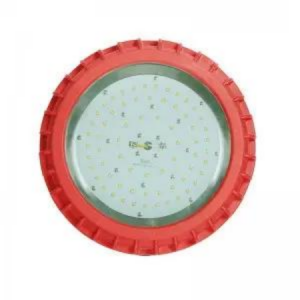
The BZD130 Series Explosion-proof LED Lighting is available for hazardous gas and combustible dust environments. Its official certification documentation lists several rated-power options and mounting configurations.
Key product information:
l Gas environments: IIA, IIB, and IIC, Zones 1 and 2
l Dust environments: IIIA, IIIB, and IIIC, Zones 21 and 22
l Rated power options: 20 W, 30 W, 40 W, 50 W, 60 W, 80 W, 100 W, and 120 W
l Mounting options: ceiling, pendant, bracket, flange, and fence
l Ex marking: Ex db IIC T5 Gb and Ex tb IIIC T95°C Db
l IP protection: IP66
l Certification listed by Sunleem: ATEX and IECEx, with EAC certification also listed on the product portfolio page
BYD703 Series for Explosion-Proof Linear Lighting
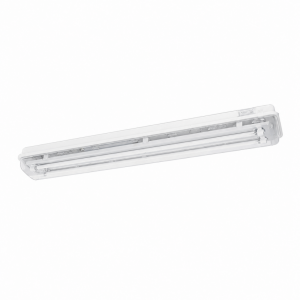
The BYD703 Series Explosion-proof Linear Light is designed for hazardous environments and features a glass-fiber-reinforced plastic (GRP) enclosure and a polycarbonate (PC) light diffuser. The series offers fluorescent and LED light sources, with a built-in interlocking mechanism that cuts off power when the cover is opened. Emergency lighting is available as an option, depending on the model.
Key product information:
l Product type: explosion-proof linear light
l Enclosure: glass-fiber-reinforced plastic (GRP)
l Light diffuser: polycarbonate (PC)
l Light sources: fluorescent and LED
l Ex Marking: Ex db eb IIC T4 Gb; Ex tb IIIC T80°C Db
l Ingress protection: IP66
l Rated voltage: 100–240 V AC, 50/60 Hz
l Emergency lighting: optional; emergency duration of at least 120 minutes, with 180 minutes available as an option for applicable configurations
l Ambient temperature: −25°C to +55°C for fluorescent models; −40°C to +55°C for LED models; −55°C to +55°C for EAC configurations
l Certification status: the product page lists IECEx and ATEX as under application and provides an EAC certificate number
What Certifications Matter When Buying Explosion-Proof Lighting?
Certification should be considered in relation to the target market and the regulatory requirements applicable to the project. A certificate alone does not determine whether a particular fixture is suitable for every installation.
IECEx Certification
IECEx provides an international conformity-assessment framework for equipment used in explosive atmospheres. When reviewing an IECEx-certified product, buyers should check the certificate number, equipment marking, protection method, and any specific conditions of use.
ATEX Certification
ATEX is relevant to equipment intended for applicable European explosive-atmosphere requirements. Buyers should verify the specific certificate associated with the product and configuration rather than assuming that every product from the same manufacturer has the same certification.
Matching Certification with the Installation
The selected certificate should be reviewed together with the product’s Ex marking and the conditions of use specified for the installation.
For example, the BFD610 IECEx documentation includes specific conditions of use related to mounting, cable glands, opening after de-energization, and other installation requirements. This illustrates why reviewing the complete certification documentation can be important during equipment selection.
How Should Different Industries Choose Explosion-Proof Lighting Manufacturers?
The selection process should begin with the specific hazards and environmental conditions of the installation rather than the industry name alone.
Petrochemical and Oil and Gas Facilities
These facilities commonly involve flammable gases, vapors, or liquids. Engineers should pay particular attention to hazardous-area classification, gas groups, temperature classification, and corrosion exposure.
New Energy and New Materials Production
The relevant hazards can vary significantly with the production process. Lighting should therefore be selected according to the documented presence of flammable gases, chemicals, solvents, or combustible dust.
Pharmaceutical and Brewing Facilities
Specific processing areas may involve flammable substances or combustible dust. Equipment selection should reflect the hazards of the individual area rather than applying one specification across the entire facility.
Marine and Offshore Environments
In addition to hazardous-area requirements, these installations may involve moisture, salt exposure, corrosion, and demanding environmental conditions. Product construction, ingress protection, certification, and environmental suitability should therefore be reviewed together.
What Should You Remember When Choosing Explosion-Proof Lighting Manufacturers?
Choosing among explosion-proof lighting manufacturers requires more than comparing appearance, wattage, or price. Buyers should verify that the manufacturer’s documented product specifications and certifications correspond to the requirements of the intended installation.
Sunleem’s official portfolio includes explosion-proof LED lighting, floodlights, and linear lighting, with certification information available for several product series.
For buyers, a practical approach is to define the hazardous environment first, identify the required protection and certification, and then compare manufacturers using documented product information. This helps ensure that the selected explosion-proof led lights manufacturer can be evaluated against the actual technical and regulatory requirements of the project.
Post time: Nov-16-2026


