
Industrial facilities routinely overlook heavy-duty cable glands because these termination components sit quietly on enclosures and motor housings. Hazardous environments with volatile gases or combustible powders subject cable entry points to persistent mechanical vibration and chemical attack from ambient fumes. Neglecting termination seals leaves plant networks vulnerable to internal ignition spread and costly production interruptions.
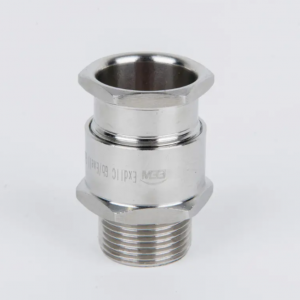
Protective integrity deteriorates gradually rather than failing instantaneously. Unnoticed wear allows flammable mixtures to migrate along cable armor or enter terminal chambers where switching arcs occur. Catching physical breakdown early preserves facility safety and avoids unexpected regulatory shutdowns.
Hardened or Deformed Elastomeric Compression Rings
Elastomeric sealing rings help seal the cable entry against dust and moisture, with the sealing performance depending on the gland design and its certified application. Exposure to extreme process temperatures, ultraviolet radiation, and solvent vapors extracts plasticizers from chloroprene or silicone compounds. Hardened rubbers lose elastic recovery, transforming a flexible gas seal into a brittle, cracked plug.
Replacing a compromised explosion proof cable gland becomes urgent once the outer compression seal exhibits flattening, flaking, or hairline splits. Over-tightening compression nuts to compensate for deteriorated seals can damage the cable or gland components and does not restore the original certified sealing performance. Crumbled elastomeric rings discovered during maintenance demand immediate unit replacement.
Our manufacturing specialists at Sunleem EEW engineer high-grade vulcanized seals to withstand sustained thermal cycling. Field personnel should never repack an aged fitting with uncertified generic rings or putty. Unauthorized changes to sealing components or their assembly can compromise the gland’s certified protection and should be avoided.
Loss of Mechanical Retention and Armor Pull-Out Resistance
Armored power and instrumentation lines depend on internal clamping cones to secure steel wire or braided armor layers. Motor vibration, thermal expansion, and accidental tugging during maintenance slowly loosen internal clamping cones over continuous operational cycles. Loose armor allows pulling forces to transfer directly onto delicate copper conductors inside the enclosure.
Checking cable firmness reveals structural loosening before conductors pull loose from terminal blocks. If an armored cable rotates independently within the entry hub or exhibits axial travel when agitated, mechanical retention has failed. Cable movement within the gland may compromise mechanical retention and, depending on the installation’s bonding arrangement, could affect electrical continuity. Any suspected defect should be inspected and tested according to the applicable installation requirements.
Damage to internal clamping rings prevents secure re-torquing on aged assemblies. Forcing deformed sleeves strips brass threads or crushes wire braids unevenly, generating dangerous hot spots under ground faults that ignite surrounding combustible dusts. Complete hardware replacement restores statutory tensile resistance and ground path integrity.
Surface Pitting, Galvanic Oxidation, and Thread Galling
Harsh offshore winds, acidic vapors, and alkaline washes degrade older cable glands faster than internal electronics. Galvanic corrosion rapidly attacks threaded interfaces where dissimilar metals touch without isolation. White powdery oxidation on aluminum or green verdigris on brass housings signals advanced metallic decay that weakens wall thickness.
Corrosion can damage threads, sealing surfaces, or other critical components and may compromise a cable gland’s certified protection. The inspection criteria depend on the gland’s design and protection concept. Escaping combustion gases must travel across intact thread crests and roots to cool below external autoignition temperatures. Pitted or eroded threads create widened clearance gaps that let dangerous flamefronts escape into surrounding atmospheres during an unexpected internal gas explosion.
Sunleem’s BDM series cable glands are available in materials including stainless steel, nickel-plated brass, and galvanized carbon steel, depending on the model. Material selection should account for the installation environment and the product’s specifications. Field technicians discovering stripped, sheared, or seized threads during maintenance must replace the entire assembly immediately rather than forcing unions with pipe sealant.
Moisture Penetration and Internal Enclosure Condensation
Water droplets pooling inside sealed enclosures often point directly to compromised entry seals rather than ambient humidity. High-pressure washdowns in pharmaceutical and food processing facilities relentlessly test external elastomeric seals. A weeping gland permits water ingress that corrodes delicate electrical relays, shorts circuitry, and triggers false process trips.
Moisture tracks and mineral streaks beneath conduit entries confirm catastrophic ingress barrier failure. Capillary action draws external liquid films along cable outer sheaths straight past deteriorated sealing lips. Once water penetrates beyond primary gland barriers, internal corrosion spreads rapidly throughout connected instrumentation.
Substandard seals frequently fail post-washdown pressure tests while appearing intact to visual inspection. Replacing a damaged or unsuitable gland with a model certified for the required environmental conditions may improve moisture protection. Verify the specified IP rating, cable compatibility, sealing arrangement, and installation requirements before replacement. Preserving enclosure dryness requires tight ingress protection alongside structural explosion defense.
Structural Distortion from Thermal Stress or Mechanical Shock
Physical impacts from mobile machinery, dropped tools, or heavy maintenance rigging permanently bend metallic entry bodies. Deformed gland housings pinch internal conductors and distort machined flamepaths beyond certified tolerances. Hairline casting cracks compromise pressure containment capability during internal deflagrations, creating severe life safety risks for technicians.
Localized thermal discoloration indicates dangerous electrical anomalies or excessive conduit heat transfer. Dark brown heat staining, bubbling entry paint, or scorched outer sheathing suggests persistent electrical overload or loose termination resistance nearby. Extreme heat permanently softens gland metals and destroys elastomeric seals.
Selecting a cable gland with the appropriate certification, sealing configuration, and cable compatibility helps maintain the intended protection of the cable entry when installed according to the manufacturer’s instructions. Damaged, bent, or thermally scorched fittings cannot safely contain explosive blast pressures. Removing compromised hardware prevents catastrophic system failures across high-risk process zones.
Executing a Proactive Field Replacement Protocol
Scheduled shutdown turnarounds offer the ideal window for replacing aging entry assemblies across classified production units. Maintenance supervisors should catalog every gland exhibiting rubber embrittlement, loose armor clamping, thread erosion, moisture ingress, or impact trauma. Grouping replacements during scheduled outages prevents unplanned shutdowns and regulatory penalties.
Consulting with Sunleem EEW enables plant operators to match exact cable diameters, armored constructions, and atmospheric hazard ratings without guessing. Rigorous field inspection coupled with swift component replacement ensures every connection point maintains uncompromising containment against volatile industrial hazards.
Post time: Nov-25-2026


