
Cable type directly affects how a gland should be selected for a hazardous-area electrical entry. Armored cables include additional structural layers, while unarmored cables depend more on the outer sheath for retention and sealing. Cable diameter, sheath construction, and installation conditions can also vary between cable designs. These differences need to be identified before gland size and configuration are confirmed.
When selecting an explosion proof cable gland, we therefore start with the cable specification. Understanding what enters the equipment gives us a more practical basis for comparing gland options and preparing accurate project requirements.
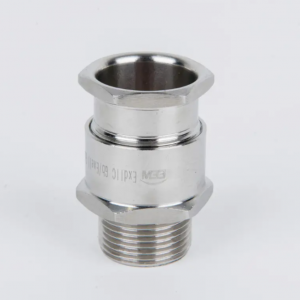
Cable Construction Sets the Starting Point
Armored and unarmored cables present different connection conditions. We first identify which cable construction is being used because this determines which dimensions and structural details need closer attention during gland selection.
With armored cables, the protective metallic layer becomes an important part of the selection process. The armor type and relevant dimensions should be checked from the cable specification rather than estimated from its overall appearance.
Unarmored cables do not have this metallic armor layer. Selection therefore places more attention on the outer sheath, cable diameter, and the required retention arrangement. Treating both cable types in the same way can result in an unsuitable gland specification.
Armored Cables Require More Dimensional Information
Outside diameter alone does not provide enough information for an armored cable. We also need to understand its armor construction because cables with similar external sizes can have different internal structures.
Project teams should record the relevant armor dimensions together with the overall cable diameter. This provides more useful information when comparing gland specifications and helps distinguish between cables that may otherwise look similar in a cable schedule.
Replacement projects deserve the same attention. If a new cable differs from the original cable construction, the existing gland should not automatically be assumed to suit it. We recommend checking the new cable data before confirming reuse.
Unarmored Cables Put More Focus on the Sheath
For unarmored cables, the outer sheath becomes a central selection reference. Its outside diameter needs to fall within the specified cable range of the selected gland.
Cable dimensions should come from technical documentation whenever possible. Similar conductor sizes do not necessarily mean identical outside diameters. Insulation thickness, sheath construction, and cable design can change the final dimensions.
When multiple cable glands are required, we suggest listing each unarmored cable by its actual outside diameter. This makes it easier to separate similar electrical cables that require different gland sizes.
Sheath Conditions Vary Between Cable Types
Cable sheath material and site conditions should be reviewed together. Heat, moisture, dust, oil, chemicals, and outdoor exposure can create different requirements around the cable entry.
Different cables within one facility may also face different environments. A cable routed indoors may not experience the same conditions as one installed around outdoor process equipment. We therefore avoid selecting solely from cable size.
At Sunleem EEW, we consider cable construction, sheath conditions, and the installation environment as connected selection factors. This keeps the discussion focused on how the actual cable will be used rather than treating the gland as an isolated accessory.
Equipment Entry Details Complete the Cable Check
Once cable construction and dimensions are clear, the equipment entry needs to be reviewed. Thread type and entry size should correspond with the planned gland configuration.
Equipment documentation can provide the required entry information. For projects using several enclosure, lighting, motor, or junction-box designs, these details should be recorded separately rather than assuming that all entries use the same arrangement.
Selecting an explosion proof cable gland therefore involves two sides of the connection. One side is defined by the cable construction and dimensions. The other is defined by the equipment entry and the installation requirements.
Hazardous Area Information Cannot Be Separated
Cable type is central to gland selection, but hazardous-area classification still needs to be considered. Project teams should identify the applicable gas or combustible dust environment before finalizing the gland specification.
Our BDM Series Explosion-proof Cable Gland is suitable for IIA, IIB, and IIC explosion hazardous gas Zone 1 and Zone 2. It is also suitable for combustible dust IIIA, IIIB, and IIIC Zone 21 and Zone 22.
These classifications do not replace the cable checks discussed earlier. At Sunleem EEW, we still review whether the cable is armored or unarmored, its dimensions, and its entry conditions when considering a gland for a particular project location.
Cable Schedules Make Differences Easier to See
Projects with several cable types benefit from a clear cable entry schedule. We recommend recording cable identification, armored or unarmored construction, outside diameter, relevant armor details, equipment entry information, hazardous-area classification, and installation location.
This method allows procurement teams to compare requirements before ordering cable glands. It also prevents different cables from being grouped together simply because they have similar conductor specifications.
The same records can support site work later. Installation teams can check which gland has been specified for each cable rather than making selection decisions again at the equipment location.
Let the Cable Type Guide the Choice
Different cables require different checks before a gland can be specified. Armored cables place more attention on armor construction and dimensions, while unarmored cables require careful review of the outer sheath and overall diameter. Equipment entries and hazardous-area conditions then complete the selection picture.
We use these differences to keep gland selection tied to the cable that will actually enter the equipment. Clear cable data gives engineering and procurement teams a practical reference for specifying each connection instead of relying on one general selection rule for every cable type.
Post time: Nov-19-2026


