
Hazardous industrial areas require electrical systems to consider more than individual devices. Cable routing, mechanical protection, environmental exposure, and equipment connections all affect the overall installation. Conduit plays an important role because cables often need protection while passing between junction boxes, lighting fixtures, pipes, and other electrical components.
When planning explosion proof conduit, we first look at the complete cable route. Equipment position, mechanical exposure, environmental conditions, and the need for flexible connections can influence the conduit arrangement. Reviewing these factors together gives project teams a clearer basis for planning cable protection in hazardous areas.
Conduit Protects the Cable Route
Industrial cables can pass through areas exposed to moisture, dust, chemicals, mechanical contact, or other demanding conditions. Conduit creates an external protective route around the cable and helps reduce direct exposure along the installation path.
Protection is particularly important between electrical devices. Cables may run from junction boxes to lighting fixtures or between different parts of a piping and electrical arrangement. We therefore consider both the cable and the route when reviewing conduit requirements.
Maintenance also needs attention. Clearly planned cable routes make it easier to identify connections during inspection or equipment servicing. Conduit should support practical cable organization without making later access unnecessarily difficult.
Flexible Connections Address Installation Needs
Completely rigid routing is not practical at every connection point. Limited space, changes in direction, equipment layout, or vibration can create locations where some movement or flexibility is needed.
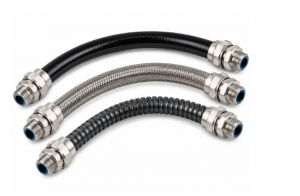
An explosion proof flexible conduit can be used for flexible connections in such locations. The required configuration depends on where the connected equipment is positioned and how the cable needs to approach the entry point.
We also review the length of the flexible section. Excessive or unsuitable routing can complicate installation, while an appropriate length can help accommodate the intended connection. The complete cable path should therefore be checked before the conduit is specified.
Environmental Conditions Affect Selection
Hazardous industrial sites can involve high temperatures, high humidity, corrosive conditions, and other environmental challenges. These conditions need to be considered because conduit forms part of the cable protection arrangement throughout its service environment.
Site conditions can vary considerably within one project. Outdoor areas may differ from enclosed processing spaces, while chemical or industrial production areas may involve different exposure factors. We recommend identifying these conditions for each installation point.
For projects supported by Sunleem EEW, we consider environmental information together with cable routing and equipment connections. This keeps conduit selection focused on actual operating conditions rather than relying only on a general product specification.
Connection Details Need Early Attention
Conduit does not work independently from the equipment around it. Each section connects with junction boxes, lighting fixtures, pipes, or other components, so the interfaces at both ends need to be reviewed before installation.
Thread size is one practical detail. Different equipment entries can require different connection sizes. We recommend confirming the entry information during project planning instead of waiting until conduit installation begins.
Length is another factor. Cable routes with different distances between equipment may require different conduit lengths. Recording connection points, thread information, and route dimensions can make procurement more organized when many connections are involved.
Flexible Conduit for Harsh Environments
Some installation points combine the need for flexibility with demanding environmental conditions. In these cases, project teams need to review product type, thread size, required length, and site conditions together.
Our NGd Series Explosion-proof Flexible Conduit offers multiple product types, thread sizes, and lengths for selection. It is suitable for harsh environments, including high temperatures, high humidity, and highly corrosive conditions. The series provides reliable cable protection for applications that require flexible connections.
It is widely used for connections between explosion-proof junction boxes, lighting fixtures, and pipes. When selecting this explosion proof flexible conduit, we still recommend matching the configuration to the actual connection distance, thread requirement, cable route, and surrounding environment rather than selecting from product type alone.
Conduit Supports the Complete Protection Arrangement
Hazardous-area electrical installations contain several connected parts. Junction boxes, lighting fixtures, cables, cable entries, conduit, and related components perform different functions within the same system.
This means explosion proof conduit should be considered in relation to the equipment at both ends of the cable route. A suitable conduit arrangement needs to reflect how the cable travels between those components and what conditions it encounters along the way.
We also recommend recording conduit type, thread size, length, connected equipment, and cable route after installation. Such information gives maintenance teams a useful reference when connections are inspected, modified, or replaced later.
Cable Protection Starts With the Complete Route
The role of conduit in a hazardous area protection system goes beyond covering a section of cable. It provides a planned protective path between electrical components while accommodating the mechanical, environmental, and connection requirements of the installation.
Our work at Sunleem EEW focuses on these practical project conditions when conduit configurations are discussed. Cable route, connection type, flexibility, thread size, length, and environmental exposure should be reviewed together. This approach keeps the final selection connected to the actual installation and gives engineering teams clearer information for procurement, installation, inspection, and maintenance.
Post time: Nov-20-2026


