
Industrial control systems often operate in environments where flammable gases, vapors, liquids, or combustible dust may be present. In these locations, choosing an electrical enclosure is not simply a matter of finding the right size. The equipment must match the hazardous-area classification, protection method, environmental conditions, cable-entry requirements, and applicable certifications.
For engineers working in petrochemical, new energy, new materials, pharmaceutical, brewing, marine, and offshore facilities, a systematic selection process can help avoid compatibility problems during installation. This guide explains how to select explosion-proof electrical equipment for industrial control systems and determine which type of explosion-proof electrical box is appropriate for a specific application.
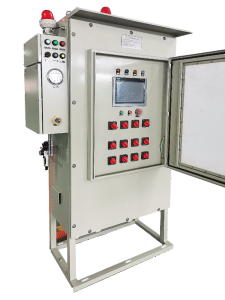
Why Do Industrial Control Systems Need Explosion-Proof Electrical Equipment?
Industrial control systems require suitable explosion-proof electrical equipment when electrical components are installed in hazardous locations where an ignition source could interact with flammable gases, vapors, or combustible dust.
Electrical Hazards in Industrial Control Systems
Control systems contain electrical connections, terminals, switches, and other components that may generate heat, sparks, or electrical arcs under certain conditions. When these components are installed in an area containing ignitable materials, the equipment must be suitable for the classified location.
Matching Protection to the Hazard
Hazardous areas are not identical. A facility handling flammable gases has different requirements from one where combustible dust is the primary concern. Zone classification, gas or dust group, and temperature classification can all affect equipment selection.
Therefore, an enclosure should not be selected only because it is generally described as “explosion-proof.” Its actual Ex marking and certification need to correspond to the conditions of the installation.
What Should You Check When Choosing an Explosion-Proof Electrical Box?
The selection process should begin with the hazardous-area classification and then consider the protection method, environmental conditions, physical configuration, cable entry, and certification.
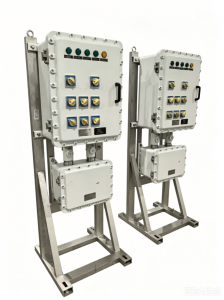
Determine the Required Enclosure Type
Before comparing individual products, determine whether the application requires a junction box, empty enclosure, control panel, or another enclosure configuration. The choice depends on the components to be installed, wiring arrangement, control functions, and available installation space.
Hazardous Area Classification and Ex Protection
First identify the hazardous area in which the electrical box will be installed. Engineers should determine the applicable zone or division, gas or dust group, and temperature classification before selecting a product. The exact Ex marking should then be checked against the requirements of the installation and the selected product configuration.
Enclosure Protection and Environmental Conditions
The surrounding environment also affects selection. Outdoor, marine, offshore, and chemical-processing installations may expose electrical equipment to moisture, dust, corrosive substances, or changing temperatures.
Ingress protection should therefore be checked alongside the Ex protection method. For example, Sunleem’s EJB101 Series is specified with IP66 enclosure protection in its IECEx documentation.
Materials, Dimensions, and Cable Entry
The enclosure needs sufficient space for the intended terminals and components while fitting the available installation area. Material selection should also reflect the environmental conditions.
Cable entry is equally important. Cable glands, stopping plugs, and unused openings must be compatible with the enclosure and its protection requirements. A properly selected box can still create installation problems if the cable-entry arrangement does not match the project requirements.
Certification and Installation Compatibility
Certification should be verified for the exact product and configuration. Depending on the project and target market, engineers may need to consider IECEx, ATEX, or other applicable certification systems.
The certification documents should be checked together with the product specifications rather than relying only on a general product category.
Which Explosion-Proof Enclosure and Installation Components Fit Different Control Applications?
Different control applications require different enclosure configurations. A junction box is intended primarily for protected electrical connections, while an empty enclosure can accommodate specified components as part of a certified assembly. Control panels are designed for more integrated control functions.
|
Product Type |
Typical Function |
Key Selection Consideration |
|
Explosion-proof junction box |
Protects electrical connections and terminals |
Ex marking, hazardous-area classification, IP protection |
|
Explosion-proof empty enclosure |
Provides an enclosure for specified components |
Internal components, dimensions, certification requirements |
|
Explosion-proof control panel |
Houses integrated control equipment |
Control functions, configuration, installation environment |
|
Explosion-proof cable gland |
Provides protected cable entry |
Cable type, entry size, Ex and IP requirements |
|
Explosion-proof stopping plug |
Closes unused enclosure openings |
Thread compatibility, Ex marking, protection requirements |
EJB101 Series for Electrical Connections
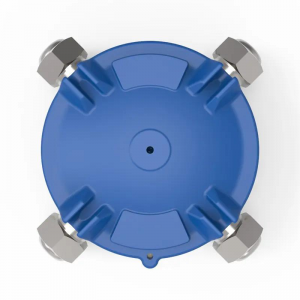
A junction box is suitable when the main requirement is to provide a protected location for electrical connections.
Sunleem’s EJB101 Series Explosion-proof Junction Box is designed for hazardous gas environments in Zones 1 and 2 and combustible dust environments in Zones 21 and 22, covering IIA/IIB/IIC gas groups and IIIA/IIIB/IIIC dust groups.Its IECEx documentation specifies Ex db IIC T* Gb and Ex tb IIIC T* Db protection markings and IP66 enclosure protection.
EJB102 Series for Enclosure Applications
An empty enclosure is useful when engineers need to integrate specified electrical components into a protected enclosure. Sunleem offers EJB102 Series products in both explosion-proof junction box and empty enclosure configurations for hazardous-area applications.
For the empty-enclosure version, Sunleem lists Ex db IIC Gb and Ex tb IIIC Db protection, with ATEX and IECEx certification for the applicable configuration.
Cable Glands and Stopping Plugs for Complete Installation
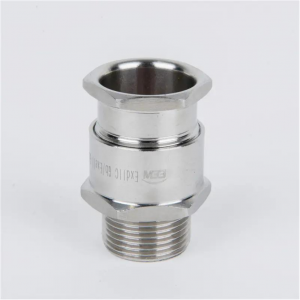
The main enclosure is only one part of a hazardous-area electrical installation. Sunleem also offers BDM Series Explosion-proof Cable Glands and EBP Series Explosion-proof Stopping Plugs.
These components should be selected together with the enclosure because cable entries and unused openings form part of the overall protection arrangement.
How Does Sunleem Support Explosion-Proof Electrical Box Selection?
Sunleem EEW provides electrical equipment and installation products for hazardous industrial environments. Its portfolio allows engineers to select different enclosure and connection components according to the requirements of the control system and installation environment.
Rather than choosing a box based only on its physical dimensions, engineers can compare the product’s Ex protection, hazardous-area application, enclosure protection, materials, cable-entry requirements, and certification.
This approach is particularly important when explosion-proof equipment is installed as part of a larger control system. The main enclosure and its associated cable-entry components need to be compatible with the overall installation requirements.
How Should You Choose Explosion-Proof Electrical Equipment for Different Industries?
The basic selection principles remain similar across industries, but the actual hazards and environmental conditions must be evaluated for each facility.
Oil and Gas and Petrochemical Facilities
Petrochemical and oil-and-gas facilities may contain flammable gases, vapors, and liquids around processing, storage, and transfer areas. Engineers should consider hazardous-area classification, gas groups, temperature classification, corrosion exposure, enclosure protection, and cable-entry requirements.
New Energy and New Materials Applications
New energy and new-materials facilities can involve combustible gases, chemicals, solvents, or dust depending on the production process. Equipment should therefore be selected according to the documented process hazards rather than the industry category alone.
Pharmaceutical and Brewing Facilities
Pharmaceutical and brewing facilities may contain combustible dust or flammable substances in specific process areas. Equipment should be selected according to the documented process hazards and environmental conditions.
Marine and Offshore Facilities
Marine and offshore facilities may require additional attention to moisture, salt exposure, corrosion resistance, ingress protection, and hazardous-area classification.
What Should You Remember When Selecting an Explosion-Proof Electrical Box?
Selecting an explosion-proof electrical box is a system-level decision rather than a simple enclosure-size comparison. Engineers should evaluate hazardous-area classification, Ex protection, gas or dust group, temperature requirements, environmental conditions, cable entry, and certification together.
For industrial control systems, the appropriate solution may be a junction box, empty enclosure, control panel, or a combination of enclosure and cable-entry components. Products from Sunleem provide different configurations for specified hazardous-area applications.
By checking product specifications and certification against the actual project conditions, engineers can reduce compatibility issues during procurement and installation and establish a more consistent approach to hazardous-area electrical equipment selection.
Post time: Nov-16-2026


